


When faced with the kitchenware aisle, are you hesitating between a stainless steel pan and a stainless steel pan?
Good news: there is no difference.
These two terms refer to exactly the same material. "Inox" is simply the common abbreviation for stainless steel.
But be aware, not all stainless steels are created equal. Even if the name is the same, the quality of the alloy makes all the difference. Between a high-end 18/10 stainless steel and a low-end alloy, the difference lies in durability, food neutrality, and cooking performance.

Stainless steel vs. Stainless steel: Why two names?
The term "stainless steel" comes from the contraction of "inoxidable" , a key property of this metallic alloy.
Composition: Iron + Carbon + Chromium (min 10.5%).
It is the chromium that creates an invisible "passive layer" upon contact with air, protecting the metal from rust.
This protective coating regenerates automatically if it is scratched. That's why your stainless steel pans retain their shiny appearance year after year, even after hundreds of washes.
The real confusion: Stainless Steel vs. Carbon Steel
The real question isn't about the name, but about the type of steel . Because while stainless steel doesn't rust, that's not the case for all steels.
Both have their fans. Carbon steel appeals to purists for its authentic look. Stainless steel pleases those who seek ease of maintenance and absolute neutrality.
How to recognize "Good" Stainless Steel? The 18/10 Standard
Not all stainless steels are created equal. Their chemical composition determines their qualities. The key figure to remember: 18/10 .
- 18 : 18% chromium (corrosion resistance)
- 10 : 10% nickel (for shine and food neutrality)
Nickel plays a crucial role. It's what gives stainless steel its perfect chemical inertness . 18/10 steel doesn't react with any food, even acidic ones (tomatoes, lemons).
Multilayer (Ply) technology
Pure stainless steel is a poor conductor of heat. That's why quality pans use an encapsulated aluminum core.
Advantages: Even distribution, no hot spots, induction compatible.
To learn more about stainless steel grades, see our detailed guide on 18/10, 18/8 and 18/0 stainless steel.
Why is cooking in stainless steel better for your health?
The neutrality of 18/10 stainless steel makes it the ideal material for healthy cooking. Unlike non-stick coatings, stainless steel contains no endocrine disruptors .
What you avoid with stainless steel:
- PFAS (perennial pollutants)
- PTFE (Teflon)
- PFOA
18/10 stainless steel offers complete chemical inertness . The natural taste of your ingredients remains intact. Furthermore, it doesn't wear out: no coating to chip or peel in your food.
"Does it stick?": Mastering cooking in a stainless steel pan
The main concern with stainless steel is that food will stick. This apprehension stems from a lack of understanding of the technique.
The Water Drop Test (Leidenfrost Effect)
The classic mistake: putting oil in a cold pan
Big mistake! The oil will polymerize and create a sticky film. Always heat the pan empty first.
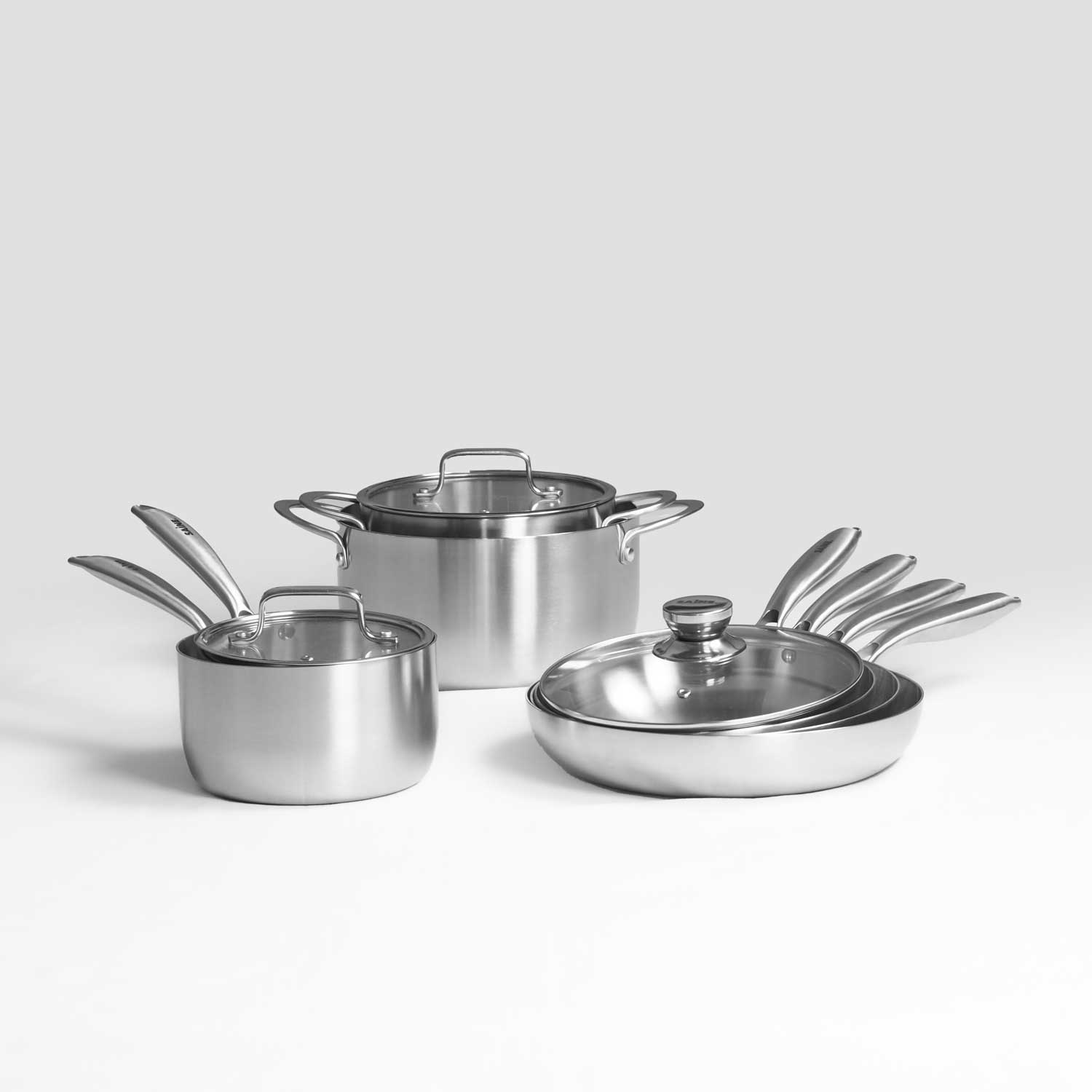
SAINE Pans: The Excellence of 18/10 Stainless Steel
At SAINE, we have chosen excellence with 18/10 stainless steel and multi-layer construction.
- Certified 18/10 stainless steel : zero chemical migration
- Multi-layer technology : perfect diffusion
- Lifetime guarantee : guaranteed durability
- 100% recyclable : environmentally friendly

FAQ: Your questions about stainless steel pans
What is the difference between a stainless steel pan and stainless steel?
None. "Inox" is the abbreviation for stainless steel. It's the same material.
What exactly is 18/10 stainless steel?
A steel containing 18% chromium and 10% nickel. The quality standard for strength and shine.
Why is my stainless steel pan sticking?
It's not hot enough. Do the water drop test before adding the oil.
Can a stainless steel pan be put in the dishwasher?
Yes, no problem. Stainless steel is very durable.
Is stainless steel compatible with induction cooktops?
Yes, if the pan has a magnetic base (like all SAINE pans).
Do you need to season a stainless steel pan?
No, never. It's ready to use after a simple wash.
Share:
Stainless steel pan or non-stick pan: Which is really the best choice for your kitchen?
Which pan is best for a ceramic hob? The complete guide