


You pay attention to the origin of your vegetables and the quality of your meat. But have you thought about the material you cook them in?
It's a fact that's often ignored: healthy cooking starts with healthy cookware. Unfortunately, many pans sold in supermarkets release chemicals or heavy metals into your food as soon as they heat up or become damaged.
⚠️ The situation is alarming:
A scratched or poor-quality pan can turn an organic dish into a chemical cocktail (PFAS, aluminum particles, endocrine disruptors). Here's a guide to decluttering your cupboards.

The 5 types of toxic pans to banish from your kitchen
1. Classic non-stick pans (Teflon / PTFE)
It's been a kitchen staple for 50 years, but it's also the most controversial. These pans are coated with PTFE (polytetrafluoroethylene). The danger arises as soon as the coating is scratched or overheated (above 230°C, a temperature quickly reached).
To delve deeper into this major health issue, I invite you to read our full article to understand why you should choose pans without Teflon or PFAS .
2. Non-anodized aluminum
Aluminum is a neurotoxic metal. If it comes into direct contact with food (especially acidic foods like tomatoes or lemons), it leaches into your food. That's why most aluminum pans are coated... but if the coating wears off, the aluminum is exposed.
3. Untinned copper
Beautiful as a decorative piece, raw copper reacts chemically with acidic foods (verdigris), which can be toxic in high doses. Old copper pans require regular re-tinning, which is costly and time-consuming.
4. Low-end ceramics (the false friend)
Often marketed as the "green" alternative, ceramic is actually a thin layer of silica bonded to... aluminum. The problem? It's very fragile. Once scratched, it loses its properties and exposes the metal underneath.
5. Utensils with chipped enamel
Enamel is safe as long as it is intact. But on old vintage pans, chipped enamel can release lead or cadmium, which were once used in color pigments.
Comparison: What are the risks associated with which material?
To get a clearer picture, here is a summary of the health risks by type of material.
| Material | Main risk | Verdict |
|---|---|---|
| Non-stick (Teflon) | PFAS, Toxic gases if overheated | ❌ To be avoided |
| bare aluminium | Particle migration (neurotoxic) | ❌ To be banned |
| Stone / Ceramic | Fragility, rapid loss of non-stick properties | ⚠️ Caution |
| 18/10 stainless steel | None (inert material) | ✅ Excellent choice |
The safe alternative: Why switch to 18/10 stainless steel?
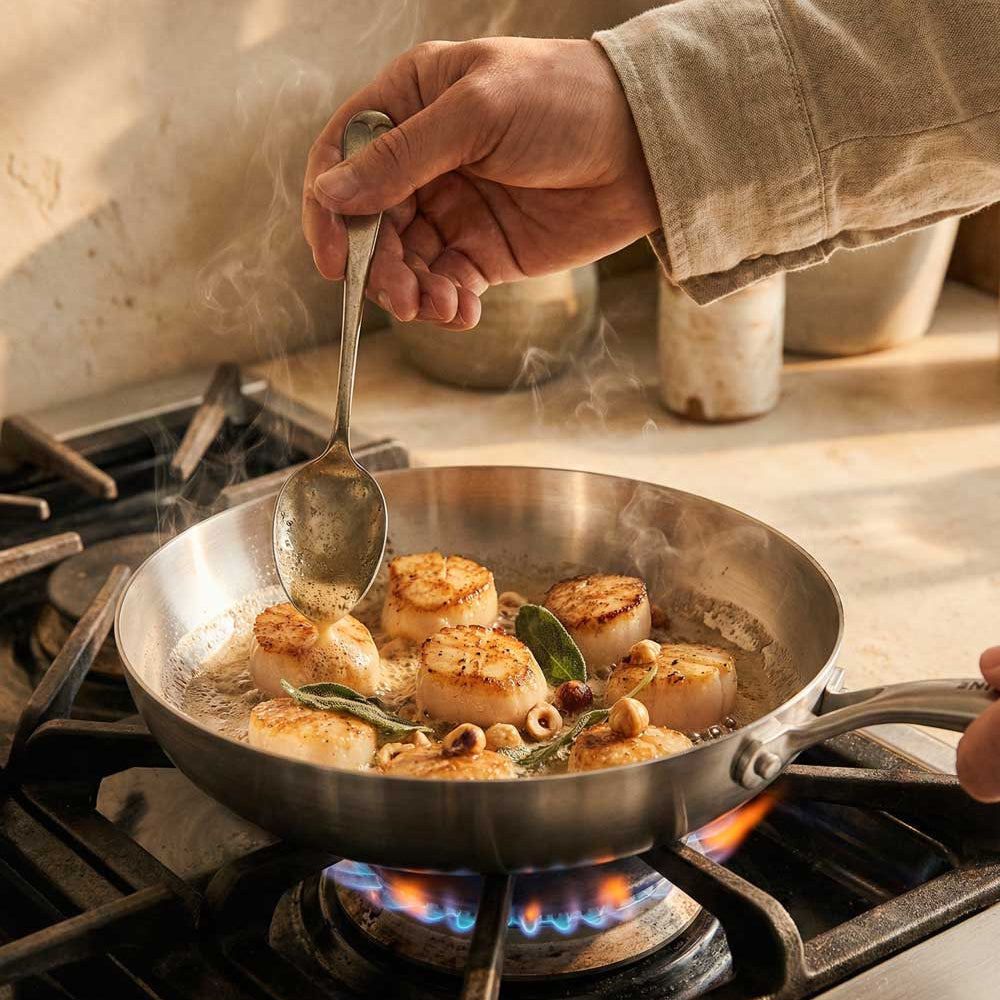
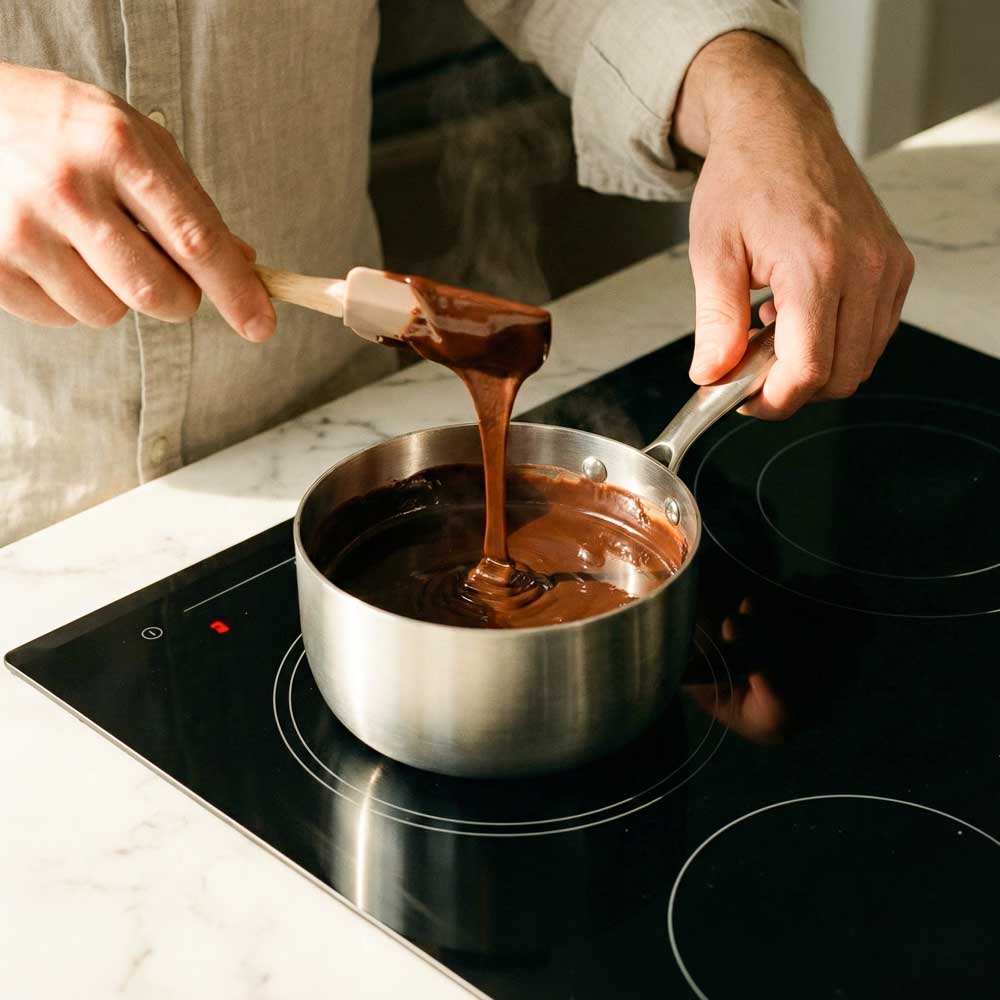
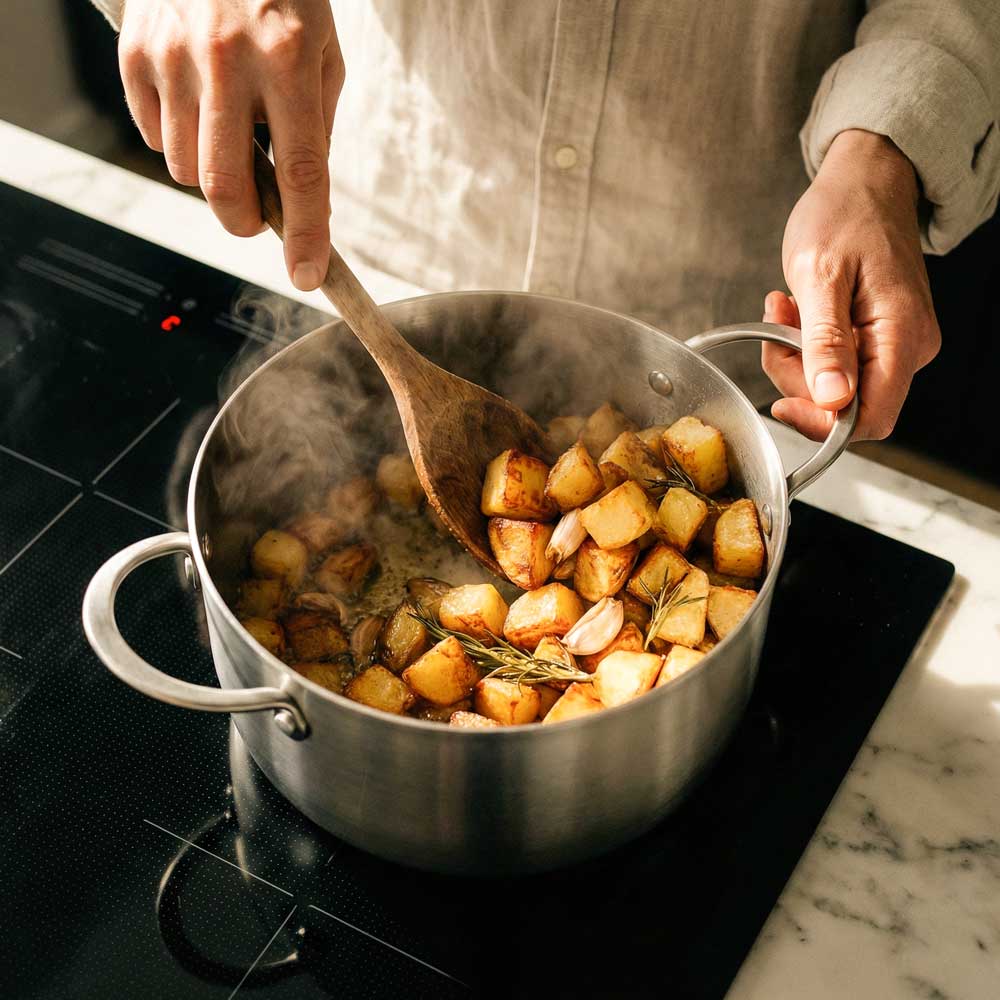
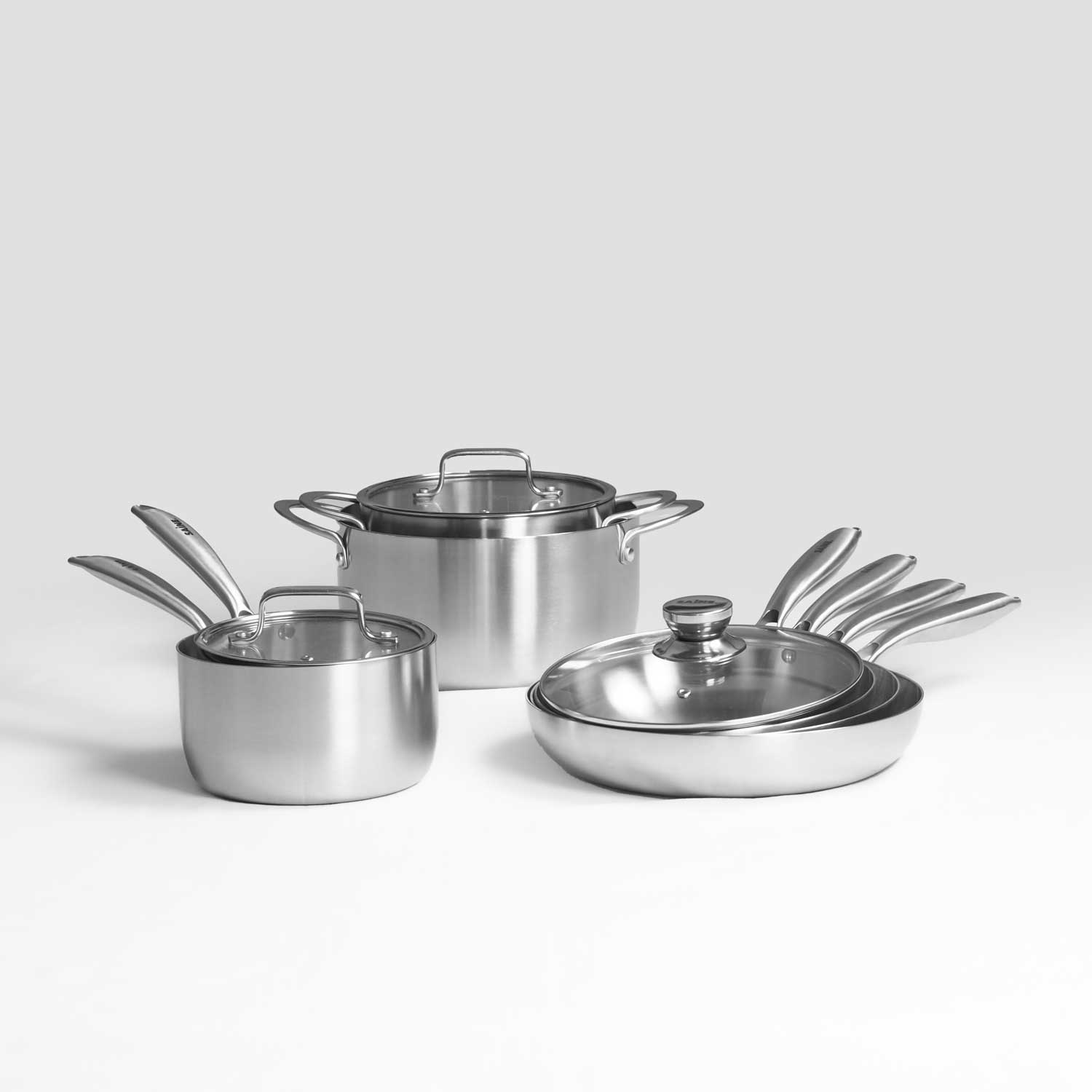
If you're looking for absolute safety, 18/10 stainless steel is the standard used by professionals and hospitals. It's a stabilized alloy that doesn't react with food.
Saine Inox guarantees:
By choosing our cookware, you're opting for cooking without chemical coatings. No "layer" that will end up in your stomach in two years. Just pure steel, guaranteed for life.
Some people are concerned about the presence of nickel or chromium. We have addressed these issues with complete transparency. You can read our article separating fact from fiction regarding the alleged dangers of stainless steel pans .

A word about nickel allergy
18/10 stainless steel contains 10% nickel, which gives it its shine and rust resistance. The risk of nickel migration is minimal with high-quality stainless steel, but there are precautions for people with nickel allergies. Learn all about nickel allergy and the use of stainless steel .
The Chief's Council for a Successful Transition
For more information on materials and ecology in the kitchen, please consult our Health, Safety and Environment section .
FAQ: Frequently asked questions about toxic pans
How can I tell if my pan is toxic?
If the coating is peeling, deeply scratched, or changing color, it's time to replace it. A non-stick pan has an average lifespan of 2 to 3 years.
Which pan is the least toxic?
The 18/10 stainless steel pan, the natural cast iron pan and the iron pan are the safest options because they do not have any synthetic coating.
Is Teflon carcinogenic?
PFOA (used to make Teflon) has been classified as a carcinogen and banned. Modern PTFE is stable, except when overheated (>230°C) where it can emit harmful fumes.
What can I use to replace my Tefal pan?
Stainless steel is the ideal replacement: it is lightweight (unlike cast iron), dishwasher safe and indestructible.

Share:
Which pan is the healthiest? A complete comparison (Stainless Steel, Cast Iron, Stone)
Are stone stoves good for your health? (The Hidden Truth)