


Are you wondering which pan material to choose to protect your health and that of your family? Between non-stick coatings that degrade, materials that release toxic substances, and misleading marketing claims, it's hard to know where to start. The question of cookware material is far from trivial: we use it daily, sometimes several times a day, and it comes into direct contact with our food at high temperatures.

In this comprehensive guide, we'll compare the main pan materials available on the market (stainless steel, cast iron, stone, aluminum, ceramic) to help you make the healthiest choice possible. You'll discover the advantages and disadvantages of each material, their health impacts, and why some should be avoided altogether.
🏆 Direct answer: 18/10 stainless steel (also called surgical stainless steel) is the healthiest material for cooking. It releases no toxic substances, withstands high temperatures without degrading, contains no PFAS or PFOA, and lasts a lifetime. It is the only material used in hospitals and professional kitchens because it is completely inert when in contact with food.
Why the choice of material for your pan is crucial for your health
The cooking material isn't just a matter of performance in the kitchen. It's primarily a matter of public health. When you cook, several phenomena occur:
- Chemical migration: At high temperatures, some materials release particles or chemical compounds that migrate into your food.
- Coating degradation: Non-stick pans scratch and chip, releasing microplastics and toxic substances.
- Gradual accumulation: Even at low doses, repeated exposure to certain substances (such as PFAS) accumulates in the body over the long term.
- Reaction with food: Some metals react chemically with acidic foods (tomatoes, lemon, wine) and release metal ions.
That's why it's essential to understand precisely what your cooking utensil contains, and what it can release onto your plate.
Detailed comparison of stove materials: advantages, disadvantages and health impacts
| Material | Health | Sustainability | Interview | Price |
|---|---|---|---|---|
| 18/10 stainless steel | ✅ Excellent (neutral, non-toxic) | ✅ Lifetime (indestructible) | ✅ Easy (dishwasher safe) | €€€ |
| Enameled cast iron | ✅ Good (if enamel is intact) | ⚠️ Medium (fragile enamel) | ⚠️ Delicate (sensitive to impacts) | €€€ |
| Natural stone | ⚠️ Variable (often aluminum underneath) | ❌ Low (coating wears out quickly) | ⚠️ Medium | €€ |
| Non-stick (PTFE/Teflon) | ❌ Bad (PFAS, toxic degradation) | ❌ Very low (2-3 years max) | ✅ Easy | € |
| Ceramic | ⚠️ Medium (coating is deteriorating) | ❌ Low (loses grip quickly) | ✅ Easy | €€ |
| bare aluminium | ❌ Dangerous (aluminum migration) | ⚠️ Medium | ⚠️ Medium | € |
18/10 stainless steel: the undisputed champion of health
18/10 stainless steel (containing 18% chromium and 10% nickel) is considered the safest material for cooking. Here's why:
- Total chemical neutrality: Stainless steel does not react with any food, even acidic foods. It does not release any substances into your preparations.
- Exceptional thermal resistance: It withstands temperatures exceeding 500°C without degrading or releasing volatile compounds.
- Zero PFAS, zero PFOA: Unlike non-stick pans, stainless steel contains no toxic "perpetual pollutants".
- Medically approved: 18/10 stainless steel is the only material used for surgical instruments and medical implants, proof of its complete safety.
- Endless durability: A quality stainless steel pan literally lasts a lifetime, avoiding waste and repeated exposure to new coatings.
💡 Scientific fact: 18/10 stainless steel naturally forms an invisible layer of chromium oxide on its surface, called the "passive layer." This layer is what makes it completely inert and corrosion-resistant. Even if you scratch your stainless steel pan, this layer reforms instantly upon contact with oxygen in the air.
Enameled cast iron: an interesting alternative with limitations
Enameled cast iron (such as Le Creuset or Staub) is also a good choice for health, but with some reservations:
- Advantages: Vitrified enamel is inert and does not release anything into food. Cast iron retains heat very well and allows for even cooking.
- Disadvantages: The enamel can chip from impacts or sudden temperature changes. Once the enamel is cracked, the bare cast iron underneath can rust and release iron. These utensils are very heavy and require careful maintenance.
- Durability: Excellent if well cared for, but the enamel remains fragile and susceptible to impacts.
Enameled cast iron is perfect for long and gentle cooking (simmering, braising), but less practical for high-heat and daily cooking.
"Stone" stoves: beware of misleading marketing
The term "stone stove" is widely used in marketing, but it often hides a very different reality:
⚠️ Warning: Most "stone pans" are NOT made of natural stone. They are usually aluminum coated with a non-stick finish to which stone or marble particles have been added for marketing purposes. The aluminum stand poses the same health risks as any aluminum pan.
- Actual composition: Aluminium + composite coating containing mineral particles
- Main problem: The coating degrades rapidly (6 months to 2 years) and exposes the aluminum underneath.
- Marketing vs. reality: Adding stone particles does not improve the product's health; it is purely a marketing strategy.
- Lifespan: Very limited, requires frequent replacement
Non-stick pans (Teflon/PTFE): the most dangerous for health
Traditional non-stick pans are the most popular, but also the most problematic for health:
- PFAS and "eternal pollutants": The coating contains perfluoroalkyl substances that never degrade in nature and accumulate in the body.
- Toxic degradation: Above 230°C (a temperature easily reached during cooking), Teflon releases toxic fumes that can cause "polymer fume syndrome".
- Microplastics: Each scratch releases microparticles of fluorinated plastic that end up in your food
- Environmental impact: PFAS contaminate water and soil for millennia.
🚨 Health hazard: Recent studies show that PFAS are linked to cancer, hormonal imbalances, fertility problems, and immune system dysfunction. These substances are now detected in the blood of 99% of the world's population. To learn more about this crucial issue, see our detailed article: The dangers of PFAS in non-stick pans .
Ceramics: an improvement, but with limitations
Ceramic-coated pans have been presented as the "healthy" alternative to Teflon pans:
- Advantages: Free from PFOA and PTFE, ceramic coating is indeed healthier when new.
- Major problem: The non-stick properties disappear very quickly (3 to 6 months of regular use). Food then starts to stick and the coating deteriorates.
- Aluminum support: As with stone, most ceramic stoves conceal an aluminum support that eventually becomes exposed.
- Cost-effectiveness: The frequent replacement required makes it a costly and environmentally unfriendly choice in the long run.
Bare aluminum: absolutely avoid it
Untreated or anodized aluminum is the worst choice for health:
- Migration into food: Aluminum reacts strongly with acidic foods (tomatoes, lemon, vinegar) and releases significant amounts of metal ions.
- Neurotoxicity: The accumulation of aluminum in the body is suspected of being linked to neurodegenerative diseases.
- Not recommended by the authorities: ANSES (French Agency for Food, Environmental and Occupational Health & Safety) recommends limiting dietary exposure to aluminum.
Why 18/10 stainless steel remains the number 1 choice for your long-term health
After analyzing all available materials, 18/10 stainless steel stands out as the only material that combines all the criteria for excellence:
“In 20 years of professional cooking, I’ve tested all types of pans. Today, I only use 18/10 stainless steel. It’s the only material that guarantees me total neutrality, infinite durability, and absolute versatility. Once you master cooking with stainless steel, you never go back.”
— Michelin-starred chef, culinary instructor
The decisive arguments in favor of stainless steel:
- One-time investment: Unlike non-stick pans that need replacing every 2-3 years, a quality stainless steel pan lasts 30, 40, 50 years or more
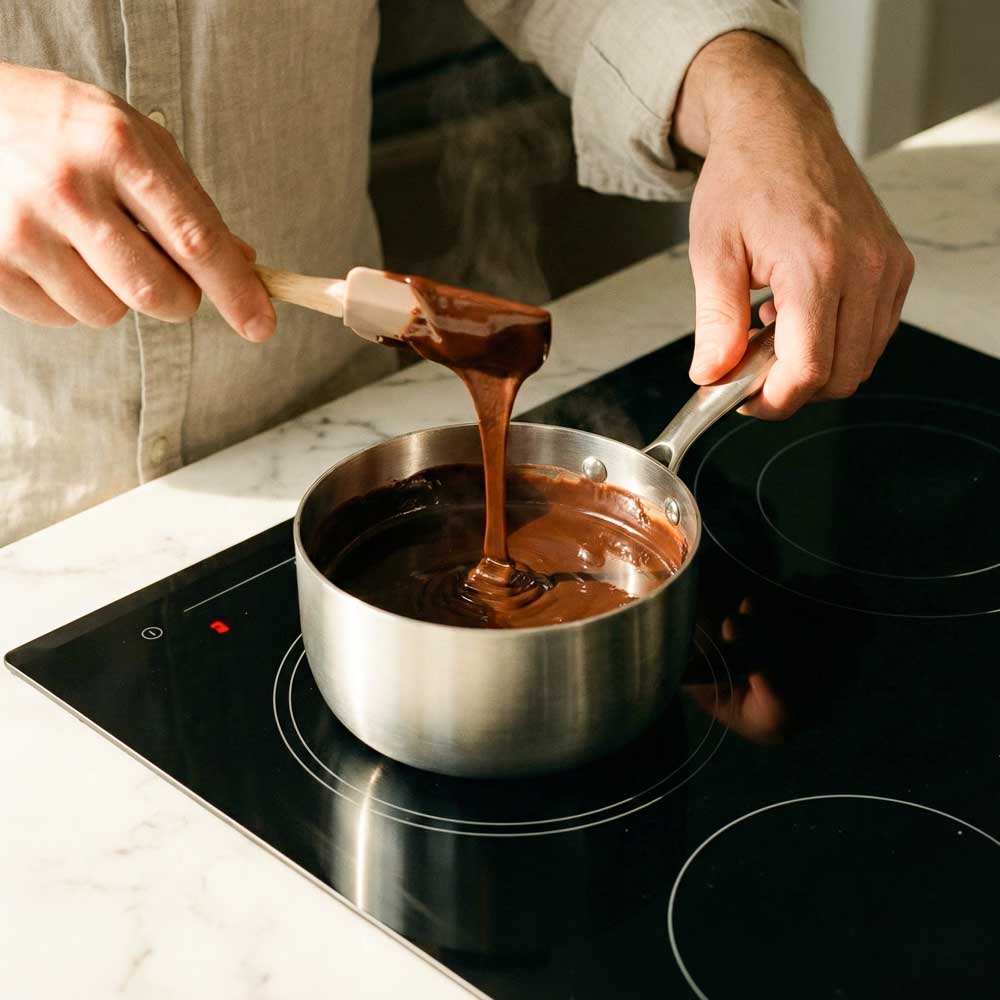
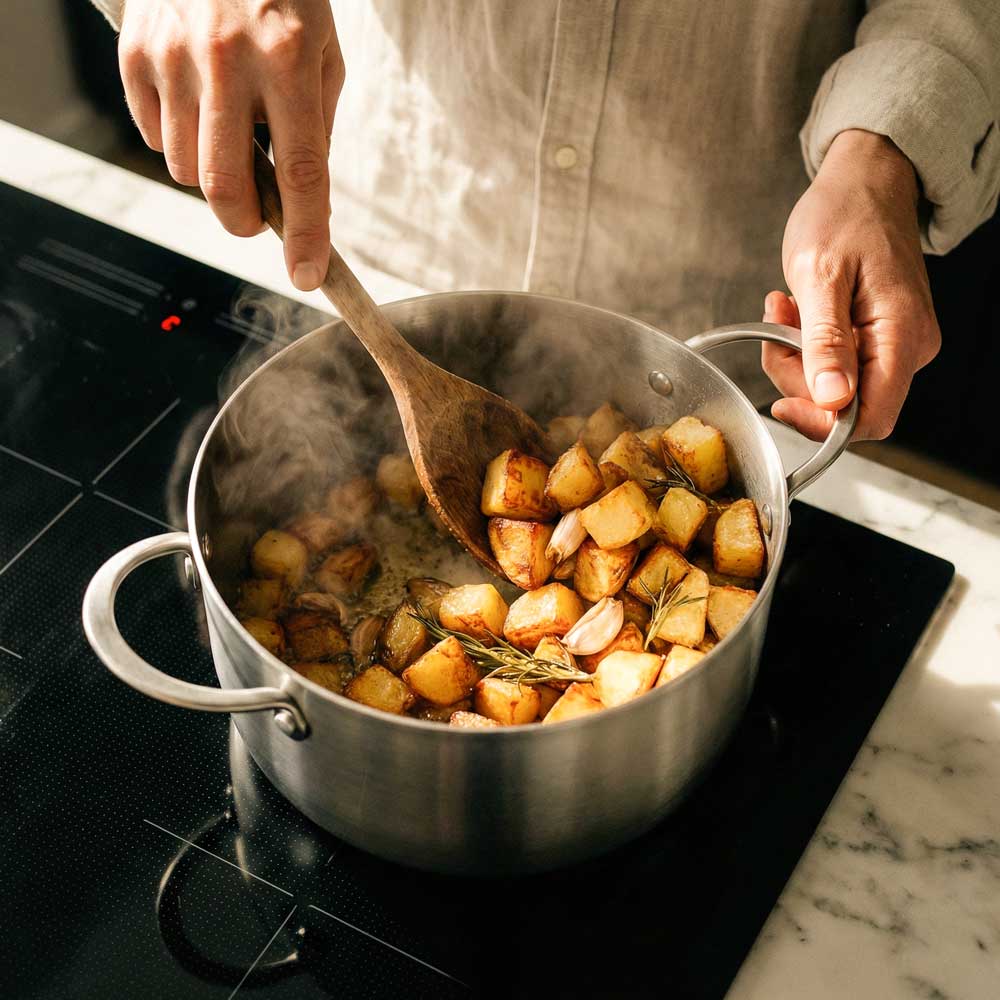
- Total versatility: Oven, induction hobs, gas, ceramic, wood fire... stainless steel adapts to all heat sources
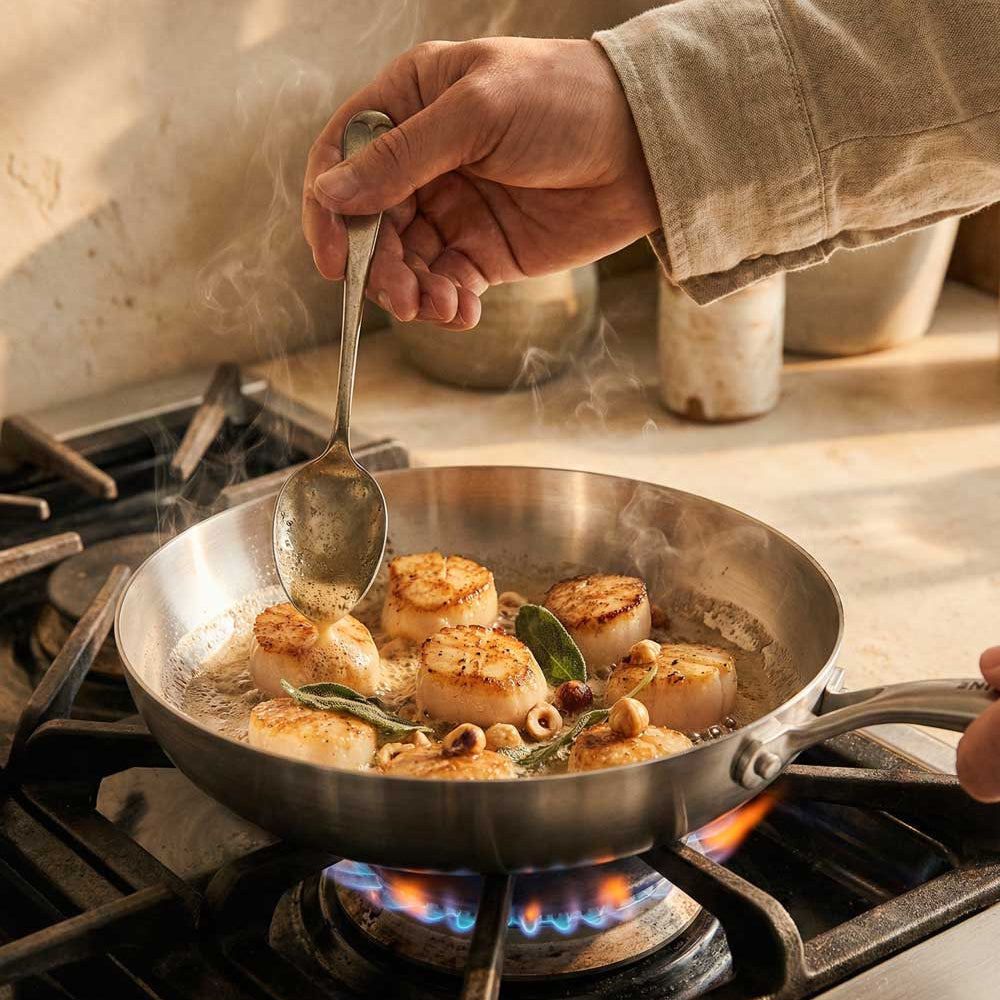
- Professional cooking: Stainless steel allows for deglazing, the creation of caramelized juices, and all the techniques of haute cuisine.
- No compromise on health: It's the only material that exposes you to NO risk, regardless of the temperature or type of food.
- Zero special maintenance: Stainless steel is dishwasher safe, compatible with all utensils (even metal ones), and resistant to cleaning products.
To learn more about why stainless steel is also an ecological and responsible choice, we invite you to read: Why a stainless steel pan is an ecological and responsible choice .
SAINE stainless steel pans: the French benchmark in health and sustainability
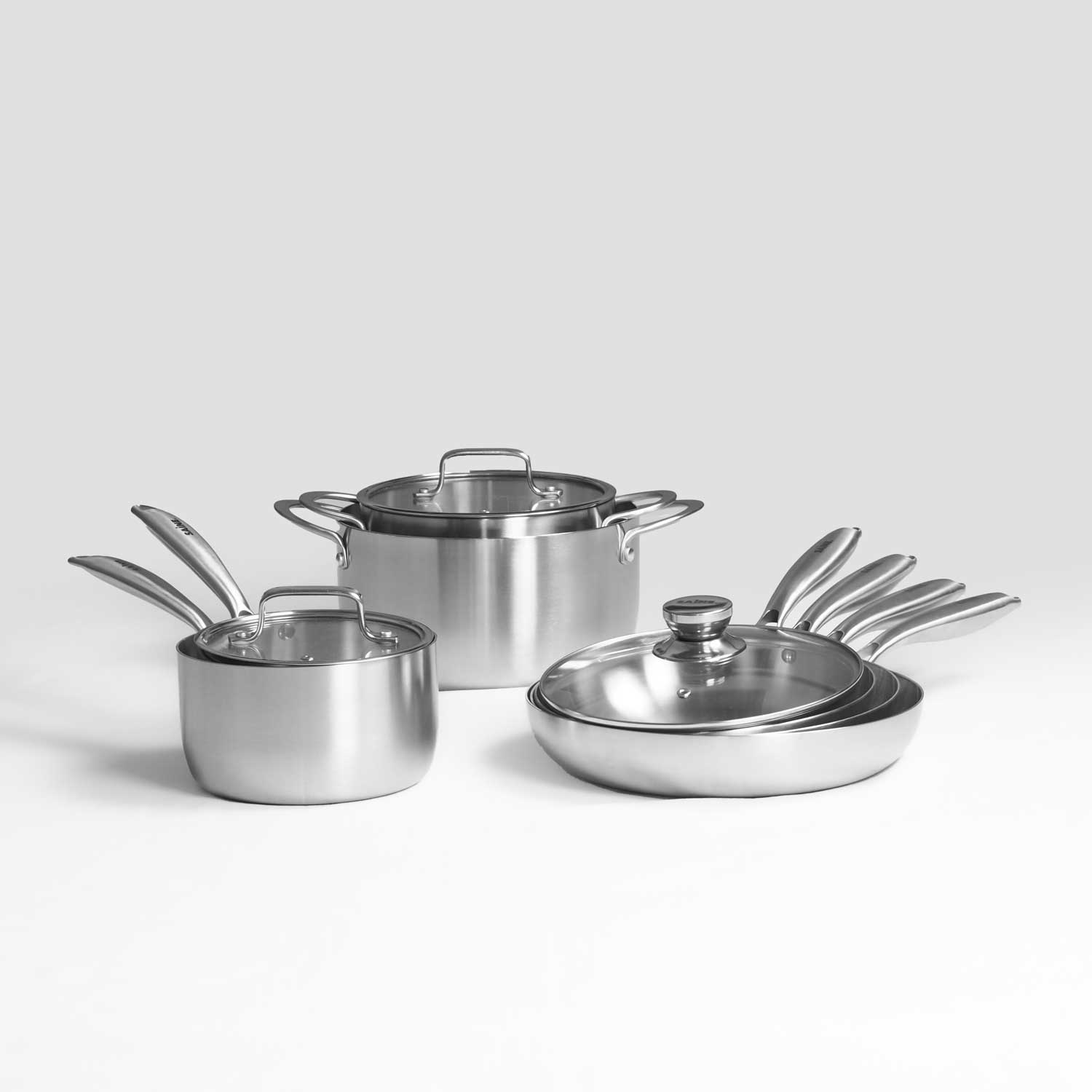
At SAINE Inox, we have made the radical choice to offer ONLY 18/10 stainless steel, without any compromise. Here's what distinguishes our pans:
A patented multi-layer construction for optimal performance
Our pans use a multi-layer technology (stainless steel + aluminum + stainless steel) which combines:
- The sanitary excellence of stainless steel: Surfaces in contact with food are 100% 18/10 stainless steel
- The conductivity of aluminum: Encapsulated between two layers of stainless steel, the aluminum provides even heat distribution without ever touching your food.
- The result: Perfectly even cooking, without hot spots, with a rapid and controlled temperature rise.
Zero plastic, zero toxins, zero compromise
Unlike many brands that use plastic handles (often bakelite containing formaldehyde), we have opted for 100% stainless steel handles:
- No toxic emissions: No plastic that melts, degrades, or releases chemicals
- No oven restrictions: You can safely place your pan in the oven at 280°C.
- Absolute durability: The stainless steel handles never break, never loosen, never yellow.
- Perfect hygiene: Dishwasher safe without any restrictions
A lifetime guarantee that proves our confidence.
We guarantee our pans for life against any manufacturing defects. This isn't a marketing ploy; it's proof of our absolute confidence in the quality of our products. A SAINE stainless steel pan is designed to last for decades and can even be passed down through generations.
Ethical manufacturing and full traceability
All our products are:
- Made in Europe: We work with certified manufacturers who adhere to the strictest social and environmental standards.
- 100% traceable: We know the origin of every component of our stoves.
- Rigorously inspected: Each piece undergoes quality tests before being sold.

Share:
Are stainless steel pans really better for your health? (What science says)
Healthy cooking: 5 types of pans to absolutely avoid