


Your stainless steel pan is your daily ally for healthy and efficient cooking. But after a few uses, you notice brown marks, stubborn residue, or a dull appearance that worries you.

Good news: Contrary to popular belief, stainless steel is very easy to clean when you know the right techniques. No need for harsh chemicals or hours of scrubbing. With the right techniques and a few simple tips, your pan will regain its original shine in minutes.
In this comprehensive guide, discover all the proven methods for cleaning your stainless steel pan daily, removing stubborn stains, restoring a burnt pan, and keeping it shiny for decades.
Why is stainless steel easy to clean (contrary to appearances)?
Many people think that stainless steel pans are difficult to maintain. This is false. Here's why:
Stainless steel does not retain odors or grease.
Unlike some porous materials (such as cast iron), stainless steel is completely smooth and non-porous . Grease and odors do not penetrate the metal. They remain on the surface and are easily removed with simple washing.
No fragile coating to protect
Non-stick pans require ultra-soft sponges and special products to avoid damaging the coating. With stainless steel, you can use more effective methods without worry:
- ✅ Baking soda
- ✅ White vinegar
- ✅ Boiling water
- ✅ Soft sponge (but also a slightly abrasive sponge if necessary)
Stainless steel regenerates naturally
Stainless steel has a passive layer (chromium oxide) that forms naturally upon contact with air. Even if you rub it hard, this layer regenerates automatically. Your pan never loses its properties.
Result: You can clean your stainless steel pan without stress, even with more vigorous methods.
Daily cleaning: The quick and easy method (3 minutes)
After each normal use (without burns or stubborn stains), here's how to proceed for effective and quick cleaning.
Step 1: Let the pan cool
Important: Never plunge a hot pan directly into cold water. This sudden thermal shock can warp the base of your pan, even if it's made of high-quality stainless steel.
Best practice:
- Remove the pan from the heat
- Let it cool for 2-3 minutes at room temperature
- It should be lukewarm, not hot.
Step 2: Hot deglazing (the chef's secret)
This is the trick that changes everything . Deicing allows you to remove 90% of the residue effortlessly.
How to do it:
- Add a little hot water to the still-warm pan (about 1-2 cm).
- Return the pan to low heat for 1-2 minutes
- The water will boil gently and naturally loosen all the juices and residues.
- Scrape very gently with a wooden spatula if necessary
Result: The residue detaches instantly, without rubbing.
Step 3: Wash with soapy water
- Drain the de-icing water
- Add a few drops of dish soap
- Fill with hot water
- Rub with a soft sponge (yellow side, not green)
- Apply gentle pressure to areas with residue.
Tip: For the outside of the pan, use the same soapy sponge in circular motions.
Step 4: Rinse with clean water
Rinse thoroughly under running water to remove all soap.
Why this is important: Soap residue can leave unsightly white marks once the pan is dry.
Step 5: Immediate drying
Never let your pan dry out in the open air.
Why? Tap water contains limescale. When it dries, it leaves white marks or halos on shiny stainless steel.
The right method:
- Use a clean, dry cloth
- Wipe the entire surface (inside and out) immediately
- Pay particular attention to areas where water accumulates (edge, handle)
Result: Your pan is spotless, without streaks, ready for the next use. Total time: 3 minutes.
Remove stubborn residues and brown stains
Sometimes, food sticks more stubbornly (caramelized proteins, burnt sugars, cooked oil stains). Here are effective methods to remove them without damaging your pan.
Method 1: Baking soda (gentle and effective solution)
Baking soda is your best ally for deep cleaning stainless steel.
Why it works:
- Slightly abrasive (without scratching stainless steel)
- Alkaline (dissolves fats)
- Natural and non-toxic
- Very economical
Instructions for use:
- Generously sprinkle the bottom of the pan with baking soda.
- Add a few drops of water to form a thick paste.
- Leave it on for 10-15 minutes (the bicarbonate will dissolve the grease)
- Rub gently with a soft sponge using circular motions.
- Rinse thoroughly with hot water
- Dry immediately with a clean cloth
For very stubborn stains: Leave on for 30 minutes to 1 hour. The baking soda will penetrate and soften the charred residue.
Method 2: Boiling water + bicarbonate (for stubborn residues)
This technique combines heat and the power of bicarbonate for exceptional results.
Instructions for use:
- Fill the pan with hot water (about 2-3 cm)
- Add 2-3 tablespoons of baking soda
- Place on the stove and bring to a boil
- Let it boil for 5-10 minutes (you will see the residue detach).
- Remove from heat and let cool.
- Rub lightly with a sponge: the residue will come off effortlessly.
- Rinse and dry
Result: Even the most stubborn residue disappears. It's the preferred method of professional chefs.
Method 3: White vinegar (for burn stains and descaling)
White vinegar is excellent for:
- ✅ Remove minor burn stains
- ✅ Remove limescale
- ✅ Restore shine
- ✅ Degrease thoroughly
Instructions for use:
- Mix 50% white vinegar + 50% water in the pan
- Bring to a boil for 5 minutes
- Remove from heat and let stand for 10 minutes
- Empty and scrub with a soft sponge
- Rinse thoroughly (important: the vinegar must be completely removed)
- Dry immediately
Bonus: To revive the shine, you can also simply wipe the entire surface with a cloth soaked in pure vinegar, then rinse and dry.
Method 4: Lemon + salt (powerful natural stain remover)
This age-old combination is remarkably effective.
Instructions for use:
- Cut a lemon in half
- Sprinkle coarse salt on the surface to be cleaned
- Rub with half a lemon as if it were a sponge
- The acidity of the lemon combined with the gentle abrasion of the salt loosens the residue.
- Rinse and dry
Perfect for: Baked oil stains, caramelized residue, light browning.
How to salvage a burnt stainless steel pan: The ultimate method
Did you forget your pan on the stove and now it has black, charred spots? Don't panic, stainless steel can always be restored.
Complete Recovery Method
Step 1: Intensive bicarbonate soaking
- Fill the pan with hot water
- Add 4-5 tablespoons of baking soda
- Leave to soak overnight
Step 2: Boiling vinegar + baking soda
- Drain the soaking water
- Fill with a mixture of white vinegar and water (50/50).
- Add 2 tablespoons of baking soda (it will foam)
- Bring to a boil for 15-20 minutes
Step 3: Gentle scraping
- Let it cool down
- Scrape gently with a wooden spatula
- The charred residue detaches in patches
Step 4: Final polishing
- Make a thick paste of baking soda and water
- Rub the remaining stained areas with a soft sponge
- Rinse thoroughly
- Dry
Result: Your pan regains its original appearance, even after a severe burn.
👉 Complete detailed guide: Burnt stainless steel pan: how to restore its shine
Restore the shine and luster to your stainless steel pan
Over time and with repeated use, your pan may lose some of its original shine. Here's how to make it shine like new.
Polish with white vinegar (instant results)
- Soak a soft cloth in pure white vinegar
- Rub the entire surface (inside and out) in circular motions.
- Focus on the dull areas
- Rinse with hot water
- Dry immediately with a clean cloth
Result: Brilliant shine, like new.
Baking soda polish (mirror effect)
- Mix baking soda and water to form a paste.
- Apply to the entire surface
- Polish with a soft cloth using circular motions.
- Rinse and dry
Recommended frequency: Once a month to maintain maximum shine.
Vegetable oil (protection and shine)
This old wives' tale works remarkably well.
- After thorough cleaning and drying
- Apply a thin layer of vegetable oil (sunflower, rapeseed) with a clean cloth
- Rub in circular motions
- Wipe off the excess with a dry cloth
Benefits :
- ✅ Brilliant shine
- ✅ Fingerprint protection
- ✅ Lightweight protective film
Mistakes to absolutely avoid so as not to damage your pan
❌ Mistake 1: Using metal sponges
Why it's bad: Steel wool (green Scotch-Brite, steel wool) deeply scratches stainless steel and irreversibly dulls its shine.
Alternative: Soft sponge + baking soda. Even the most stubborn residue comes off without a metal scraper.
❌ Mistake 2: Plunging the hot pan into cold water
Why it's bad: Sudden thermal shock can warp the bottom of the pan, even if it's made of high-quality stainless steel. Once warped, the pan no longer heats evenly.
Alternative: Always allow to cool for 2-3 minutes before cleaning.
❌ Mistake 3: Leaving to air dry
Why it's bad: Limescale from the water leaves unsightly white marks that dull the shiny appearance.
Alternative: Dry immediately with a clean cloth after each wash.
❌ Mistake 4: Using harsh chemicals
Products to avoid:
- ❌ Bleach (can tarnish and corrode stainless steel)
- ❌ Chlorinated cleaners
- ❌ Ammonia
- ❌ Oven cleaners (too harsh)
Alternative: Baking soda, white vinegar, lemon. These natural solutions are more effective AND safer.
❌ Mistake 5: Stacking pans without protection
Why it's bad: The bottom of one pan rubs against the inside of the one below, creating circular scratches.
Alternative: Place a cloth, a felt divider, or hang your pans.
Can a stainless steel pan be put in the dishwasher?
Short answer: Yes, but...
High-quality 18/10 stainless steel pans (like SAINE pans ) are dishwasher safe without any technical problems.
Advantages of the dishwasher
- ✅ Saves time
- ✅ Effective cleaning
- ✅ High-temperature degreasing
Disadvantages of dishwashers
- ⚠️ Detergents may slightly dull the shine over time
- ⚠️ Risk of micro-scratches caused by other utensils
- ⚠️ Limescale deposits may appear if drying is not complete.
Our recommendation
For daily use: Hand wash (only 3 minutes using the defrosting + soap method)
For occasional cleaning: Dishwasher acceptable, but dry by hand afterwards to avoid streaks.
To preserve maximum shine for 20-30 years: Opt for hand washing.
5 pro tips for even easier cleaning
1. Deglaze after each cooking session.
This is THE technique that changes everything . By adding a little hot water to the still-hot pan and gently scraping, you avoid 90% of stubborn residue.
2. Always clean your pan on the same day
The longer you wait, the more the residue dries and hardens. Immediate cleaning is 10 times faster than delayed cleaning.
3. Use hot water, never cold water
Hot water dissolves grease much better than cold water. Result: faster and more effective cleaning.
4. Always keep baking soda and white vinegar on hand
These two natural products solve 99% of cleaning problems. No need to buy expensive specialized products.
5. Polish your pan once a month
A quick polish with white vinegar (2 minutes) will maintain the original shine for years.
👉 All our detailed tips: 5 simple tips for effortlessly cleaning your stainless steel pan
Why proper maintenance extends the life of your stove
Taking care of your stainless steel pan ensures that it will last for decades.
The benefits of regular maintenance
1. Maximum lifespan (30+ years)
A well-maintained pan literally lasts a lifetime. SAINE pans are guaranteed for life precisely because 18/10 stainless steel does not degrade when properly cared for.
2. Optimal cooking performance
A clean and smooth surface ensures:
- ✅ Even heat distribution
- ✅ Less sticking (smooth surface)
- ✅ More predictable cooking
3. Preserved shine and aesthetics
A shiny pan is more pleasant to use and to look at. Regular maintenance keeps it looking new for years.
4. Prevents the accumulation of residue
Regular cleaning prevents the build-up of residues that would become increasingly difficult to remove.
5. Guaranteed food hygiene
A clean pan = zero risk of contamination or transfer of tastes from one cooking session to another.
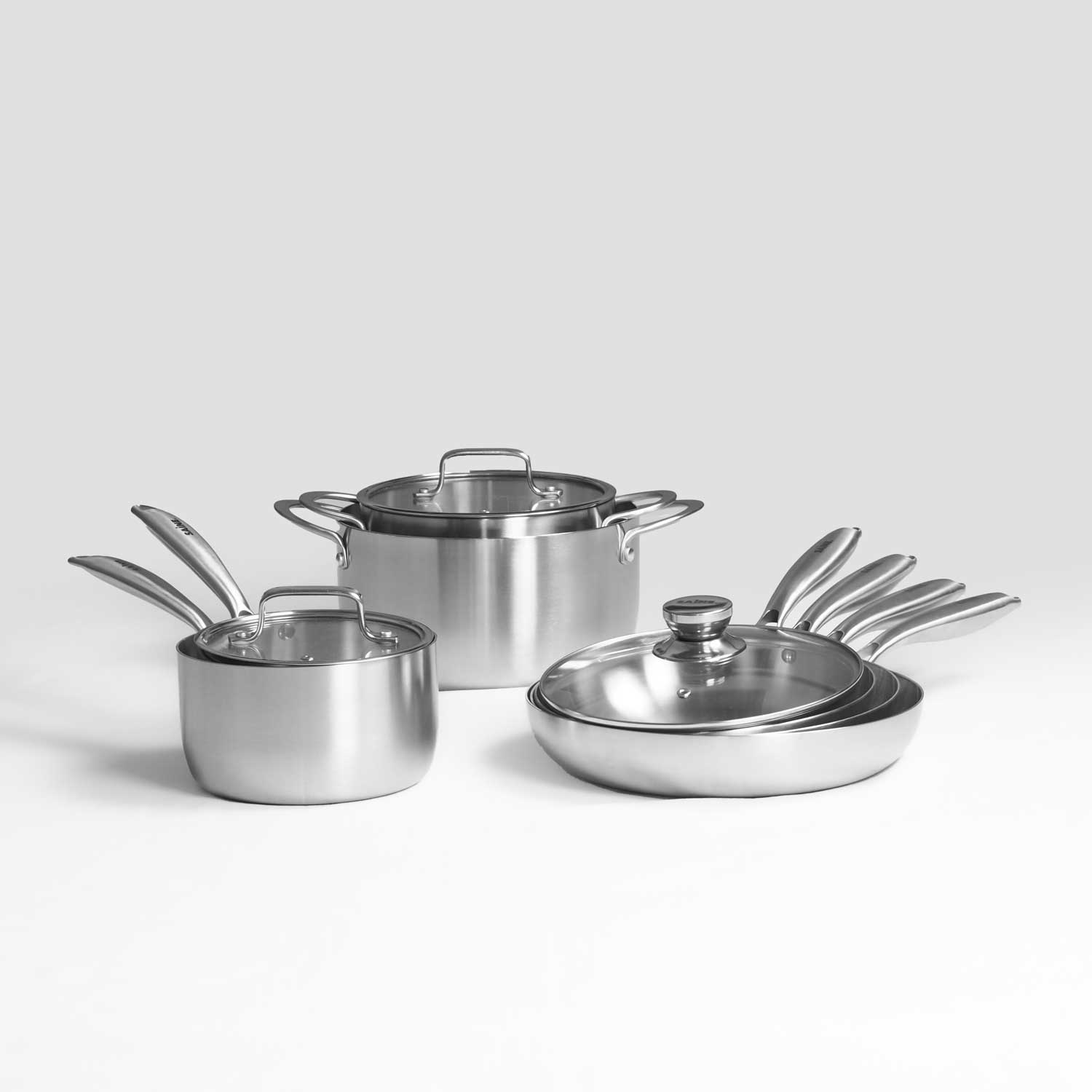
SAINE stoves: Designed for easy maintenance and maximum durability

Not all stainless steel pans are created equal when it comes to ease of maintenance. Here's why SAINE pans are exceptional:
Medical grade 18/10 stainless steel
- ✅ Ultra-smooth surface that doesn't attract residue
- ✅ Maximum corrosion resistance
- ✅ Long-lasting shine that won't dull
- ✅ Easy daily cleaning
3-ply multi-layer base
Our three-layer technology guarantees:
- ✅ Perfect heat distribution (less sticking)
- ✅ Resistance to deformation
- ✅ Perfectly flat surface that won't warp
Anti-residue design
- ✅ No visible rivets inside (no nooks and crannies where dirt can accumulate)
- ✅ 100% stainless steel handles (easy to clean, no plastic that yellows)
- ✅ Neat finish (no rough edges)
Lifetime warranty
We guarantee our stoves for life because we know that with simple maintenance, they will last for decades. It's a one-time purchase, not a disposable item.
👉 Discover our range:
- HEALTHY 22cm Frying Pan : Perfect for 1-2 people
- Complete collection of stainless steel pans : All sizes available
- All our HEALTHY products : Equip your entire kitchen
Summary: The perfect cleaning checklist
Daily cleaning (3 minutes)
- ✅ Let it cool for 2-3 minutes
- ✅ Deglaze with water while hot
- ✅ Wash with soapy water and a soft sponge
- ✅ Rinse thoroughly
- ✅ Dry immediately with a cloth
Deep cleaning (stubborn stains)
- ✅ Baking soda + water (paste)
- ✅ Leave on for 15-30 minutes
- ✅ Rub with a soft sponge
- ✅ Or: Boiling water + bicarbonate (10 minutes)
- ✅ Rinse and dry
Monthly polish (shine)
- ✅ White vinegar on a soft cloth
- ✅ Rub in circular motions
- ✅ Rinse and dry
Absolutely avoid
- ❌ Metal sponges
- ❌ Thermal shock (hot pan → cold water)
- ❌ Allow to air dry
- ❌ Harsh chemicals
- ❌ Stack without protection
FAQ: Your questions about cleaning stainless steel pans
How do I clean a very dirty stainless steel pan?
Use the boiling water and baking soda method: fill the pan with water, add 3-4 tablespoons of baking soda, and boil for 10 minutes. Let it cool slightly, then scrub with a soft sponge. The residue will come off effortlessly.
Why does my stainless steel pan have rainbow spots?
These iridescent stains are caused by overheating. They are completely harmless and do not affect performance. To remove them: boil white vinegar for 5 minutes, then gently rub with baking soda.
How do I remove the white marks from my stainless steel pan?
These are limescale deposits. Solution: pure white vinegar on a cloth, rub the stains, rinse with hot water, dry immediately. Prevention: always dry your pan after washing.
Can you use bleach on a stainless steel pan?
No, never. Bleach can tarnish and corrode stainless steel. Use baking soda and white vinegar, which are more effective and safer.
My stainless steel pan is sticking after cleaning, why?
This is probably due to soap or oil residue. Rinse more thoroughly after washing. If the problem persists, deep clean with baking soda and boiling water to remove all residue.
How can I prevent my stainless steel pan from getting scratched during cleaning?
Use only soft sponges (yellow side), never steel wool. For stubborn residue, use baking soda, which is slightly abrasive but won't scratch stainless steel. For more tips: How to avoid scratches on a stainless steel pan
How often should a stainless steel pan be thoroughly cleaned?
Simple daily cleaning is sufficient in 90% of cases. Deep cleaning (baking soda + boiling water) is recommended once a month or as soon as stubborn stains appear.
Does baking soda scratch stainless steel?
No. Baking soda is slightly abrasive, but its hardness is much less than that of stainless steel. It removes residue without scratching the surface. It's the ideal product for cleaning stainless steel.
How do you clean the outside of a stainless steel pan?
The same method as for the interior: soapy sponge for daily cleaning, baking soda for stubborn stains, white vinegar to restore shine. Always dry immediately to avoid streaks.
My stainless steel pan is new, should I wash it before the first use?
Yes, always. Wash it in hot soapy water, rinse thoroughly, and dry. This removes any manufacturing and packaging residue. Your pan is then ready to use.
Conclusion: Cleaning a stainless steel pan is simple when you know the right methods
Contrary to popular belief, cleaning a stainless steel pan is quick and easy . With the right techniques and care, you can keep your pan looking pristine for decades.
The 3 golden rules to remember
1. Deglaze systematically after each cooking session
This chef's technique eliminates 90% of residue effortlessly. It's the one trick that makes all the difference.
2. Bicarbonate of soda + white vinegar: your two best allies
These two natural and economical products solve all your cleaning problems. No need to buy expensive chemicals.
3. Dry immediately after each wash
This is the secret to avoiding limescale stains and preserving the original shine.
Your stainless steel pan: An investment for life
With simple and regular maintenance, your SAINE stainless steel pan will last you 30, 40, or 50 years. It's a long-term investment, not a consumable item to be replaced every 2-3 years.
Result :
- ✨ A pan that's always shiny and looks like new
- 🍳 Optimal cooking performance
- 💰 Massive long-term savings
- 🌍 Minimal environmental impact (zero waste)
- 💚 Healthy cuisine free from toxic substances
Ready to discover our easy-to-maintain stoves?
👉 Discover the HEALTHY collection
👉 All our products for healthy cooking
Cook healthy meals, clean easily, enjoy for longer. 🌿
Share:
Choosing quality: stainless steel as a long-term, cost-effective alternative
Which pan lasts a lifetime? Why stainless steel is unbeatable for longevity